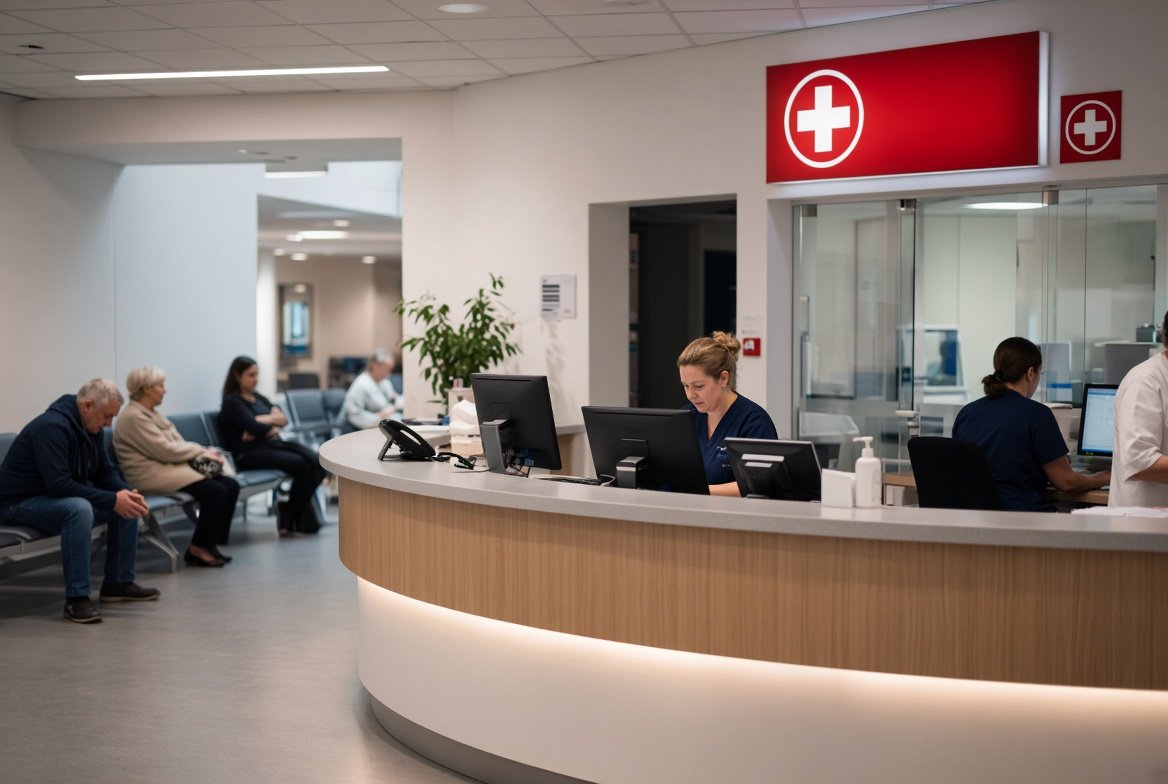
Mara steht vor der Anmeldung🇬🇧 registrationdie🇬🇧 receptiondie und legt die Chipkarte🇬🇧 health carddie🇬🇧 health insurance carddie auf die Theke🇬🇧 counterdie🇬🇧 counterdie, bevor jemand fragt. Reihenfolge spart Sätze.
Die Mitarbeiterin tippt die Versichertennummer🇬🇧 insurance numberdie🇬🇧 insurance numberdie ein und sagt, dass der Hausarzt🇬🇧 GPder eine Überweisung🇬🇧 referraldie🇬🇧 referraldie geschickt hat.
Mara wiederholt das Wort Überweisung🇬🇧 referraldie🇬🇧 referraldie, weil es Türen öffnet, die keine Klingeln haben.
Im Wartezimmer🇬🇧 waiting roomdas🇬🇧 waiting roomdas liest sie die Nummer auf dem Bildschirm dreimal. Angst vor dem eigenen Namen ist hier normal.
Ein Kind weint leise. Eine alte Frau liest dasselbe Plakat wie Mara: Hände waschen, Maske bei Infekt.
Als sie aufgerufen wird, wiederholt sie ihre Beschwerde🇬🇧 complaint / symptomdie in einem Satz, nicht in zehn. Ein Satz ist präzise.
Die Anmeldung🇬🇧 registrationdie🇬🇧 receptiondie stempelt nichts. Sie gibt nur einen Zettel🇬🇧 slipder mit der Zimmernummer🇬🇧 room numberdie und dem Namen der Station🇬🇧 warddie🇬🇧 warddie.
Auf dem Zettel🇬🇧 slipder steht auch die Uhrzeit. Wer zu spät kommt, steht wieder in der Schlange. Pünktlichkeit ist hier Medizin.
Mara findet den Aufzug🇬🇧 liftder. Dritte Etage, links, Klingel neben der Glastür. Sie atmet, bevor sie drückt.
Eine Schwester prüft die Chipkarte🇬🇧 health carddie🇬🇧 health insurance carddie ein zweites Mal. Zweimal ist in Krankenhäusern keine Beleidigung, es ist System.
Mara sagt Allergien: keine. Medikamente: eine Tablette gegen Blutdruck. Das wird notiert, nicht kommentiert.
Im Zimmer hängt ein Schild: Bitte klingeln. Sie klingelt. Warten ist eine Tätigkeit, kein Fehler.
Der Arzt kommt mit der Überweisung🇬🇧 referraldie🇬🇧 referraldie in der Hand. Er hat schon gelesen. Mara muss nicht von vorn beginnen.
Trotzdem wiederholt sie den wichtigsten Satz: Seit wann, wo, wie stark. Zahlen halten besser als Stimmung.
Nach dem Gespräch legt sie Chipkarte🇬🇧 health carddie🇬🇧 health insurance carddie, Zettel🇬🇧 slipder und Überweisung🇬🇧 referraldie🇬🇧 referraldie in dieselbe Hülle. Drei Papiere, eine Richtung.
Unten in der Cafeteria trinkt sie Wasser und schreibt die neuen Wörter: Versichertennummer🇬🇧 insurance numberdie🇬🇧 insurance numberdie, Station🇬🇧 warddie🇬🇧 warddie, Überweisung🇬🇧 referraldie🇬🇧 referraldie, Anmeldung🇬🇧 registrationdie🇬🇧 receptiondie.
Eine Woche später hat Mara einen zweiten Termin🇬🇧 appointmentder auf derselben Station🇬🇧 warddie🇬🇧 warddie, und diesmal soll die Anmeldung🇬🇧 registrationdie🇬🇧 receptiondie schneller gehen. Diese Lektion übt Sprache und ersetzt keinen Arzt und keine Behandlung. Sie legt die Chipkarte🇬🇧 health carddie🇬🇧 health insurance carddie schon im Bus auf das Heft, damit sie an der Theke🇬🇧 counterdie🇬🇧 counterdie nicht in der Tasche sucht. Auf dem Zettel🇬🇧 slipder vom ersten Tag steht die Zimmernummer🇬🇧 room numberdie, aber sie weiß, dass man sie an der Anmeldung trotzdem neu sagen muss. Im Heft stehen die Wörter Versichertennummer🇬🇧 insurance numberdie🇬🇧 insurance numberdie, Überweisung🇬🇧 referraldie🇬🇧 referraldie und Termin untereinander. Sie will heute fragen, was passiert, wenn das Lesegerät die Karte nicht mag. Diese Frage ist konkreter als die Angst vor dem eigenen Namen. Sie steigt eine Haltestelle früher aus und geht den Rest, damit die Uhrzeit nicht über sie bestimmt.
An der Theke🇬🇧 counterdie🇬🇧 counterdie legt sie die Chipkarte🇬🇧 health carddie🇬🇧 health insurance carddie hin und sagt: Ich bin zur Kontrolle, nicht zum ersten Mal. Die Mitarbeiterin zieht die Karte durch das Gerät, und das Gerät bleibt still. Kein Ton, kein Name auf dem Bildschirm. Mara spürt die Wärme im Gesicht und holt trotzdem das Heft heraus, statt sich zu entschuldigen. Die Mitarbeiterin sagt, das passiere oft, und sie brauche jetzt die Versichertennummer🇬🇧 insurance numberdie🇬🇧 insurance numberdie zum Vergleich. Mara liest die Zahl von der Karte Ziffer für Ziffer, langsam, und die Frau tippt mit. Eine Ziffer war im alten Zettel🇬🇧 slipder falsch abgeschrieben, eine Fünf sah aus wie eine Drei. Sie korrigieren die Zahl gemeinsam. Mara streicht die falsche Ziffer im Heft durch und schreibt die richtige daneben, größer als die anderen Wörter.
Danach prüft die Mitarbeiterin die Überweisung🇬🇧 referraldie🇬🇧 referraldie. Das Datum ist noch innerhalb der Frist, und der Hausarzt🇬🇧 GPder steht lesbar oben. Mara fragt, ob sie für die Kontrolle eine neue Überweisung braucht oder ob die erste noch den Weg öffnet. Die Frau sagt, für diesen Termin🇬🇧 appointmentder reiche die vorhandene Überweisung, ein neuer Zettel🇬🇧 slipder sei erst beim nächsten Quartal nötig. Mara schreibt das Wort Quartal ins Heft und fragt, was ein Quartal hier bedeutet. Drei Monate, sagt die Frau, und die Kasse denke in diesen Blöcken. Mara nickt nicht sofort. Sie wiederholt: Diese Überweisung gilt heute noch, eine neue brauche ich zum nächsten Quartal. Die Frau sagt ja. Erst dann setzt Mara einen Haken hinter den Satz.
Weil die Adresse im System noch die alte Wohnung zeigt, schiebt die Mitarbeiterin ein Formular🇬🇧 formdas über die Theke🇬🇧 counterdie🇬🇧 counterdie. Mara liest die Felder: Name, Versichertennummer🇬🇧 insurance numberdie🇬🇧 insurance numberdie, neue Straße, Datum, Unterschrift. Sie füllt langsam aus und fragt bei dem Feld Abweichung nach. Die Frau sagt, Abweichung bedeute hier nur, dass die Karte und der Bildschirm nicht dasselbe zeigen. Mara trägt die neue Adresse ein und zeigt den Ausweis, ohne dass jemand danach drängen muss. Sie unterschreibt erst, nachdem sie die Straße laut gelesen hat. Ein Zahlendreher in der Hausnummer wäre ein neuer Weg für Briefe. Die Mitarbeiterin stempelt das Formular und gibt Mara eine Kopie. Die Kopie kommt sofort ins Heft, nicht lose in die Manteltasche.
Dann kommt die Wartenummer🇬🇧 queue numberdie auf einem kleinen Ausdruck. Mara liest die Zahl zweimal und setzt sich ins Wartezimmer🇬🇧 waiting roomdas🇬🇧 waiting roomdas, nicht auf den ersten freien Stuhl direkt an der Tür. Von dort sieht sie den Bildschirm und auch die Uhr. Ein Plakat erklärt Händewaschen in vier Bildern. Sie kennt die Bilder vom ersten Besuch und liest trotzdem die Verben darunter: nehmen, reiben, spülen, trocknen. Verben merkt sie sich besser als Plakate. Neben ihr blättert jemand in einer Zeitschrift und seufzt bei jeder Seite. Mara schreibt nicht den Seufzer ab. Sie schreibt Wartenummer, Wartezimmer und die Uhrzeit, zu der sie sich gesetzt hat. Warten bekommt so einen Anfang, nicht nur ein Ende.
Als die Nummer erscheint, geht sie nicht direkt zum Arzt, sondern noch einmal zur Anmeldung🇬🇧 registrationdie🇬🇧 receptiondie, weil auf dem Ausdruck die Station🇬🇧 warddie🇬🇧 warddie fehlt. Die Mitarbeiterin zeigt auf eine Zeile klein am Rand: Station drei, Zimmer zwölf, wie beim ersten Mal. Mara bittet darum, die Zeile zu wiederholen, und schreibt sie groß auf den Zettel🇬🇧 slipder. Sie fragt, welchen Satz sie sagen soll, wenn im Flur jemand nach dem Grund fragt. Die Frau schlägt einen kurzen Satz vor: Kontrolle, Anmeldung ist erledigt, hier ist die Wartenummer🇬🇧 queue numberdie. Mara wiederholt ihn. Sie fragt auch, ob die Chipkarte🇬🇧 health carddie🇬🇧 health insurance carddie jetzt oben bleibt oder mit ihr geht. Die Karte geht mit, sagt die Frau, das Gerät hat die Daten schon genommen. Mara steckt die Karte in die vordere Tasche, nicht nach unten zum Schlüssel.
Im Aufzug🇬🇧 liftder übt sie den Satz für den Arzt, diesmal kürzer als beim ersten Besuch. Seit der letzten Woche ist die Beschwerde🇬🇧 complaint / symptomdie kleiner, die Tablette gegen den Blutdruck nimmt sie weiter, neue Allergie🇬🇧 allergydie keine. Sie will Zahlen und keine Geschichte. Oben prüft eine Pflegefachfrau die Wartenummer🇬🇧 queue numberdie und den Namen und vergleicht beides mit einer Liste. Mara zeigt die Kopie des Formulars, falls die alte Adresse noch in der Liste steht. Die Frau dankt ihr und korrigiert eine Zeile. Mara fragt, ob diese Korrektur noch einmal Geld kostet. Nein, sagt die Frau, eine Adresse sei kein Extra. Mara schreibt den Satz ins Heft, weil Kostenfragen sich sonst im Kopf vergrößern, sobald die Tür zu ist.
Der Arzt hat die alte Überweisung🇬🇧 referraldie🇬🇧 referraldie schon in der Hand und muss den Anfang nicht neu hören. Mara sagt trotzdem ihren vorbereiteten Satz und endet mit der Frage: Welche Wörter soll ich für die Arbeit benutzen, wenn jemand nach dem Termin🇬🇧 appointmentder fragt. Der Arzt sagt, sie könne sagen, es sei eine Kontrolle gewesen, ohne den Befund in den Flur der Firma zu tragen. Einzelheiten gehören in den Arztbrief, nicht in den Aufzug🇬🇧 liftder der Arbeit. Mara schreibt diese Grenze auf. Sie fragt nach dem nächsten Termin und bekommt ein Datum in vier Wochen. Sie wiederholt Datum und Uhrzeit. Der Arzt fragt, ob sie den Satz verstanden hat. Mara sagt ja und liest ihn aus dem Heft vor. Vorlesen ist hier ehrlicher als nicken.
Zurück an der Anmeldung🇬🇧 registrationdie🇬🇧 receptiondie legt sie nichts mehr auf die Theke🇬🇧 counterdie🇬🇧 counterdie, außer der Bitte um einen Stempel auf der Terminkarte. Die Mitarbeiterin stempelt und schreibt die Station🇬🇧 warddie🇬🇧 warddie noch einmal an den Rand. Mara fragt, wie sie den Termin🇬🇧 appointmentder absagt, falls der Bus ausfällt. Telefon und das Wort Absage, sagt die Frau, möglichst vor demselben Tag, und die Versichertennummer🇬🇧 insurance numberdie🇬🇧 insurance numberdie bereithalten. Mara notiert die Telefonnummer der Anmeldung groß genug für müde Augen. Sie fragt nach einem zweiten Weg, falls niemand abhebt. Dann eine Nachricht über die Nummer auf der Karte, kurz, mit Name und Uhrzeit. Zwei Wege sind ein System. Ein Weg allein ist eine Hoffnung. Mara will an diesem Tag kein Hoffen mehr üben, sondern Sätze mit einem Verb.
Im Foyer setzt sie sich an denselben Tisch wie nach dem ersten Besuch und trinkt Wasser. Die Chipkarte🇬🇧 health carddie🇬🇧 health insurance carddie, die Überweisung🇬🇧 referraldie🇬🇧 referraldie, das Formular🇬🇧 formdas und die Terminkarte kommen in eine Hülle, diesmal mit einem kleinen Papier dazwischen, damit nichts aneinander klebt. Ins Heft überträgt sie die richtige Versichertennummer🇬🇧 insurance numberdie🇬🇧 insurance numberdie noch einmal in Zifferngruppen. Gruppen sind leichter zu prüfen als eine lange Schlange aus Zahlen. Sie schreibt auch den Satz für den Flur und den Satz für die Arbeit. Dann steht sie auf und prüft die Tasche zweimal, nicht aus Misstrauen gegen das Haus, sondern weil sie die Karte schon einmal auf einer Theke🇬🇧 counterdie🇬🇧 counterdie liegen gelassen hätte, wenn die Mitarbeiterin nicht gezeigt hätte. Zeigen ist eine leise Form von Hilfe.
Auf dem Heimweg kauft sie eine Klarsichthülle, weil die alte an der Kante reißt. Im Laden sagt sie den Satz: Ich brauche eine Hülle für eine Karte und ein Formular🇬🇧 formdas. Die Verkäuferin zeigt drei Größen. Mara wählt die kleinere und behält die Quittung, obwohl es kein Eigenanteil vom Krankenhaus ist. Belege aus dem Kaufhaus und Belege aus der Klinik dürfen in derselben Mappe liegen, solange die Beschriftung stimmt. Zu Hause schreibt sie auf die Hülle mit einem Aufkleber: Anmeldung🇬🇧 registrationdie🇬🇧 receptiondie. Darunter: Chipkarte🇬🇧 health carddie🇬🇧 health insurance carddie nicht lose. Sie legt die Überweisung🇬🇧 referraldie🇬🇧 referraldie dazu und schließt die Hülle, bevor sie den Mantel auszieht. Reihenfolge zuerst, Bequemlichkeit danach. Der Mantel kann warten, das Papier nicht.
Am nächsten Morgen ruft sie die Nummer der Anmeldung🇬🇧 registrationdie🇬🇧 receptiondie an, nicht weil etwas falsch ist, sondern um den Satz für eine Bestätigung zu üben. Sie nennt den Namen, die Versichertennummer🇬🇧 insurance numberdie🇬🇧 insurance numberdie und das Datum in vier Wochen. Die Mitarbeiterin sagt, der Termin🇬🇧 appointmentder stehe, und sie brauche nichts weiter zu tun. Mara bedankt sich und legt auf. Danach schreibt sie ein Häkchen hinter den Anruf und die Uhrzeit. Ihre Schwester fragt beim Kaffee, warum man einen Termin anruft, der schon steht. Mara sagt: Weil ein Satz am Telefon mir zeigt, dass ich die Wörter habe. Ihre Schwester lacht kurz und versteht es trotzdem. Üben ohne Not ist erlaubt. Not ist kein besserer Lehrer als ein ruhiger Morgen.
Sie schneidet die alte, falsche Ziffer aus dem Heft nicht heraus. Durchgestrichene Fehler dürfen sichtbar bleiben, sonst wiederholt der Stift sie beim nächsten Mal. Neben die richtige Versichertennummer🇬🇧 insurance numberdie🇬🇧 insurance numberdie setzt sie einen Rahmen. Auf eine zweite Seite schreibt sie eine kleine Szene, wie ein Dialog: Guten Tag, hier ist die Chipkarte🇬🇧 health carddie🇬🇧 health insurance carddie. Das Gerät liest nicht. Hier ist die Nummer. Die Überweisung🇬🇧 referraldie🇬🇧 referraldie gilt noch. Ich brauche ein Formular🇬🇧 formdas für die Adresse. Sie liest den Dialog laut und ändert ein Wort, das zu höflich klingt und dadurch unklar wird. Bitte sehr streicht sie. Bitte prüfen Sie bleibt. Klarheit ist höflicher als Schmuck. Das Heft bekommt an diesem Vormittag mehr Tinte als der Roman.
Am Nachmittag legt sie die Hülle in die Tasche, die sie auch zur Arbeit nimmt, in ein Seitenfach ohne Krümel. Die Terminkarte steckt sie so hinein, dass das Datum nach oben zeigt, wenn sie das Fach öffnet. Sie schreibt auf einen Zettel🇬🇧 slipder an der Tür: Chipkarte🇬🇧 health carddie🇬🇧 health insurance carddie zurück ins Fach, nicht auf den Tisch. Solche Zettel sehen streng aus und sind nur ein Geländer. Abends liest sie die fünf neuen Sätze noch einmal und klappt das Heft dann zu. Die Anmeldung🇬🇧 registrationdie🇬🇧 receptiondie ist für diesmal erledigt. Der nächste Weg beginnt nicht mit Angst vor der Theke🇬🇧 counterdie🇬🇧 counterdie, sondern mit einer Zahl, die sie selbst prüfen kann. Das reicht als Ergebnis eines Tages, der nur Sprache üben sollte und genau das getan hat.