Die Sehstärke🇬🇧 visual strengthdie🇬🇧 eyesight / prescription strengthdie hat sich verändert. Buchstaben tanzen am Abend, als hätten sie Feierabend gemacht.
Mara macht online einen Termin🇬🇧 appointmentder beim Augenarzt🇬🇧 eye doctorder🇬🇧 eye doctorder. Die nächste freie Stunde ist in drei Wochen. Sie nimmt sie.
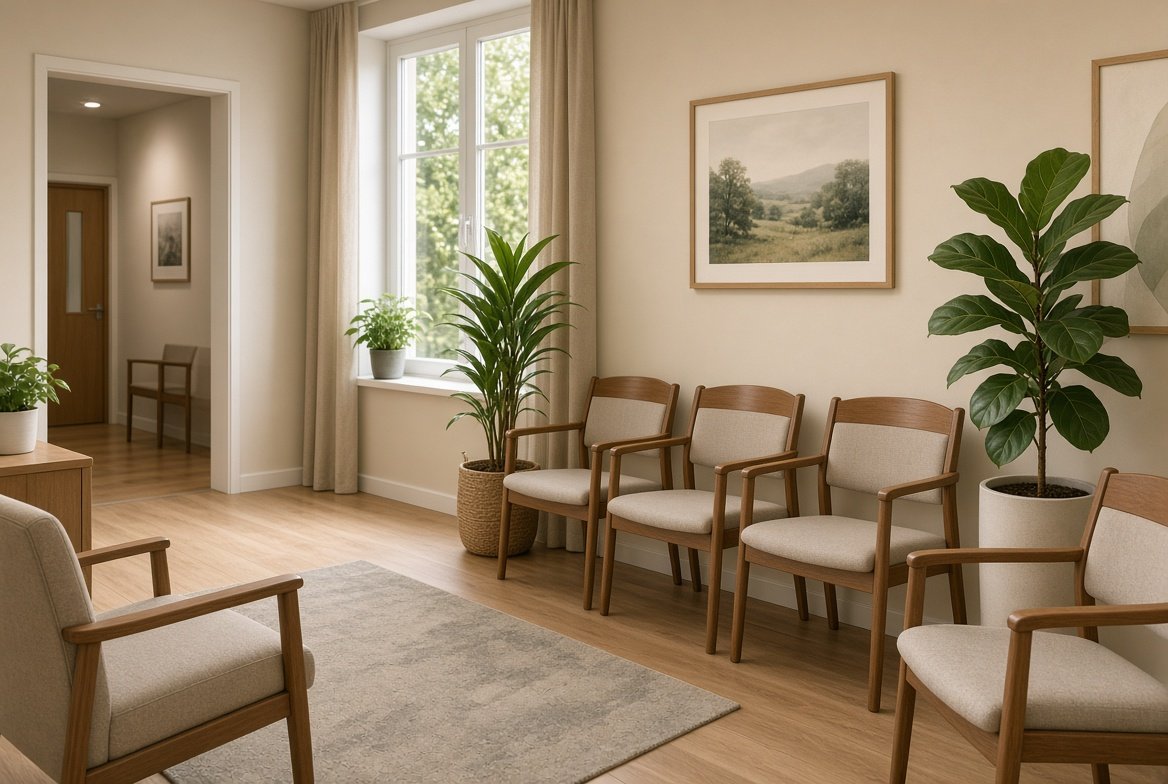
Im Wartezimmer🇬🇧 waiting roomdas hängt eine Tafel mit Buchstaben, die sie heimlich übt. Üben ändert den Befund nicht, aber die Angst.
Der Augenarzt🇬🇧 eye doctorder🇬🇧 eye doctorder tropft, wartet, misst. Die Tropfen🇬🇧 dropsder brennen kurz. Brennen ist hier vorgesehen.
Mara darf zwanzig Minuten nicht allein auf die Straße. Die Pupillen sind weit und die Sonne ist scharf.
Die Brille🇬🇧 glassesdie🇬🇧 glassesdie kommt nicht heute. Zuerst das Rezept🇬🇧 prescriptiondas für den Optiker🇬🇧 opticiander. Reihenfolge: messen, schreiben, kaufen.
Sie fragt, ob sie Auto fahren darf. Die Antwort ist ein klares Nein für heute. Nein ist hier Schutz.
Der Optiker🇬🇧 opticiander sitzt zwei Straßen weiter. Sie geht zu Fuß, mit der Überweisung🇬🇧 referraldie in der Tasche und der Sonne in den Augen.
Er liest das Rezept🇬🇧 prescriptiondas laut: Stärke links, Stärke rechts, Abstand. Mara wiederholt die Zahlen.
Eine Woche später die Anprobe🇬🇧 fittingdie. Die Welt hat wieder Kanten. Kanten sind eine Erleichterung.
Die Kasse zahlt einen Anteil. Den Rest nennt der Optiker🇬🇧 opticiander Eigenanteil🇬🇧 copayder. Mara fotografiert die Rechnung🇬🇧 billdie🇬🇧 billdie.
Zu Hause legt sie das alte Glas🇬🇧 lensdas in eine Schachtel. Aufheben ist keine Sentimentalität, es ist Vergleich.
Abends liest sie ohne Tanz. Der Satz in der Zeitung bleibt stehen. Das ist Medizin in Millimetern.
Sie trägt die Brille🇬🇧 glassesdie🇬🇧 glassesdie zur Arbeit. Niemand feiert. Sehen feiert selten.
Im Kalender steht: Kontrolle🇬🇧 follow-up checkdie🇬🇧 check-updie in zwei Jahren, bei Kopfschmerz🇬🇧 headacheder früher. Sie glaubt dem Kalender mehr als dem Gefühl.
Die Tropfen🇬🇧 dropsder sind vergessen. Geblieben ist das Wort Sehstärke🇬🇧 visual strengthdie🇬🇧 eyesight / prescription strengthdie, das sie jetzt aussprechen kann, ohne zu lächeln.
Die neue Brille🇬🇧 glassesdie🇬🇧 glassesdie sitzt seit einer Woche, und am linken Bügel drückt sie nach dem Abendlesen. Diese Lektion übt Sprache und ersetzt keinen Arzt und keine Behandlung. Mara will keinen neuen Sehtest🇬🇧 eye testder aus Angst, sondern einen Satz darüber, ob die Sehstärke🇬🇧 visual strengthdie🇬🇧 eyesight / prescription strengthdie noch stimmt und nur das Gestell korrigiert werden muss. Sie schreibt die Fragen ins Heft, bevor sie den Termin🇬🇧 appointmentder beim Augenarzt🇬🇧 eye doctorder🇬🇧 eye doctorder neu bucht. Die Praxis gibt ihr eine kurze Sprechstunde am Freitag, eine Kontrolle🇬🇧 follow-up checkdie🇬🇧 check-updie zur Brille, nicht die große Messung von vor drei Wochen. Mara legt das Rezept🇬🇧 prescriptiondas vom Optiker🇬🇧 opticiander, die Rechnung🇬🇧 billdie🇬🇧 billdie und die Brille in eine Hülle. Die alte Brille bleibt zu Hause im Karton. Vergleich ja, aber nicht zwei Gestelle auf einmal in der Tasche.
Im Wartezimmer🇬🇧 waiting roomdas hängt wieder die Tafel, und Mara liest sie nicht heimlich zum Üben. Sie kennt den Trick jetzt und lässt ihn. Stattdessen beobachtet sie, wie eine Mitarbeiterin die Menschen mit einem Wort aufruft: Sehtest🇬🇧 eye testder, Kontrolle🇬🇧 follow-up checkdie🇬🇧 check-updie, Beratung. Als Mara an der Reihe ist, sagt die Mitarbeiterin Kontrolle. Mara wiederholt das Wort, damit es nicht im Stuhl liegen bleibt. Sie gibt die Chipkarte ab und sagt, die Tropfen🇬🇧 dropsder von neulich seien vorbei und sie sei heute zu Fuß da, nicht mit dem Auto. Die Frau nickt und schreibt nichts Dramatisches. Mara setzt sich noch einmal, weil der Augenarzt🇬🇧 eye doctorder🇬🇧 eye doctorder einen anderen Raum fertig macht. Warten mit dem richtigen Wort im Ohr ist leichter als Warten mit einer Vermutung.
Der Augenarzt🇬🇧 eye doctorder🇬🇧 eye doctorder bittet sie, die Brille🇬🇧 glassesdie🇬🇧 glassesdie aufzusetzen und einen kurzen Sehtest🇬🇧 eye testder mit den Buchstaben zu machen, nur zur Kontrolle🇬🇧 follow-up checkdie🇬🇧 check-updie der Sehstärke🇬🇧 visual strengthdie🇬🇧 eyesight / prescription strengthdie. Mara liest, was sie sieht, und erfindet keine Buchstaben, die höflicher wären. Er sagt, die Sehstärke auf dem Rezept🇬🇧 prescriptiondas passe noch, der Druck komme vom Bügel und nicht von einer neuen Zahl. Mara schreibt diesen Unterschied groß ins Heft, weil Unterschied hier die ganze Beruhigung ist. Sie fragt, ob sie das Brillenglas🇬🇧 spectacle lensdas tauschen muss. Er sagt nein, das Brillenglas bleibe, das Gestell müsse der Optiker🇬🇧 opticiander richten. Sie fragt nach dem Wort Sehhilfe🇬🇧 visual aiddie, das auf einem Poster im Flur steht. Er sagt, Sehhilfe sei das Oberwort für Brille und andere Hilfen, und in ihrem Fall sei die Brille die Sehhilfe. Mara notiert Oberwort und Beispiel.
Sie fragt, ob sie nach dieser Kontrolle🇬🇧 follow-up checkdie🇬🇧 check-updie Auto fahren darf. Diesmal ist die Antwort ja, weil keine Tropfen🇬🇧 dropsder den Blick weit machen. Mara schreibt Ja neben das alte Nein und setzt das Datum dazu, damit die zwei Antworten nicht miteinander streiten. Sie fragt auch, wie sie dem Optiker🇬🇧 opticiander den Auftrag in einem Satz sagt. Der Augenarzt🇬🇧 eye doctorder🇬🇧 eye doctorder formuliert: Die Sehstärke🇬🇧 visual strengthdie🇬🇧 eyesight / prescription strengthdie bleibt, bitte den Bügel richten, das Brillenglas🇬🇧 spectacle lensdas nicht wechseln. Mara wiederholt den Satz und bittet ihn, die vier wichtigen Wörter auf einen Zettel zu schreiben. Er schreibt sie und unterstreicht nicht wechseln. Mara bedankt sich für die Unterstreichung. Eine Unterstreichung ist manchmal lauter als ein ganzes Gespräch und trotzdem höflich. Der Zettel kommt sofort ins Heft, nicht in die lose Manteltasche.
Beim Optiker🇬🇧 opticiander zwei Straßen weiter legt sie den Zettel neben die Rechnung🇬🇧 billdie🇬🇧 billdie. Der Optiker liest laut und nickt, bevor er an den Bügel fasst. Mara bittet ihn, jeden Schritt zu sagen. Er sagt: ich wärme, ich biege, ich prüfe, Sie setzen auf. Mara wiederholt die Verben, weil Verben ihr sagen, was als Nächstes kommt. Das Brillenglas🇬🇧 spectacle lensdas bleibt im Gestell. Nach dem Biegen sitzt die Brille🇬🇧 glassesdie🇬🇧 glassesdie ruhiger, und der Druck am Abendplatz ist noch nicht prüfbar, weil es Vormittag ist. Mara sagt das ehrlich. Der Optiker sagt, sie solle den Abend abwarten und wiederkommen, falls der Druck bleibt. Wiederkommen ist kein Scheitern. Es ist der nächste Satz. Mara schreibt ihn auf und setzt die Brille gerade, bevor sie aufsteht.
An der Kasse fragt sie nach den Kosten für das Richten. Der Optiker🇬🇧 opticiander sagt, das Richten des Gestells sei in ihrem Fall ohne neue Rechnung🇬🇧 billdie🇬🇧 billdie, weil die Brille🇬🇧 glassesdie🇬🇧 glassesdie erst eine Woche alt sei und zur Anpassung gehöre. Mara bittet trotzdem um eine kurze Quittung mit dem Wort Anpassung und dem Datum. Er druckt eine Zeile. Mara fotografiert sie im Laden, nicht erst zu Hause. Sie fragt, ob der Eigenanteil🇬🇧 copayder von neulich dadurch kleiner wird. Nein, sagt er, der Eigenanteil bleibt der von der ersten Rechnung, heute kommt keine neue Zahl dazu. Mara schreibt null Euro daneben und ist nicht enttäuscht. Null ist eine klare Zahl. Klare Zahlen muss man nicht feiern. Man muss sie nur ablegen, bevor sie im Kopf zu einer anderen Geschichte werden.
Zurück auf der Straße setzt sie die Brille🇬🇧 glassesdie🇬🇧 glassesdie richtig auf und liest ein Straßenschild bis zum Ende. Die Buchstaben bleiben stehen. Sie schreibt im Gehen nicht. Erst auf einer Bank am Kiosk öffnet sie das Heft und trägt die Wörter ein: Augenarzt🇬🇧 eye doctorder🇬🇧 eye doctorder, Sehstärke🇬🇧 visual strengthdie🇬🇧 eyesight / prescription strengthdie, Brille, Sehhilfe🇬🇧 visual aiddie, Brillenglas🇬🇧 spectacle lensdas, Sehtest🇬🇧 eye testder, Termin🇬🇧 appointmentder, Rechnung🇬🇧 billdie🇬🇧 billdie, Wartezimmer🇬🇧 waiting roomdas, Kontrolle🇬🇧 follow-up checkdie🇬🇧 check-updie. Hinter Sehhilfe schreibt sie das Beispiel Brille. Hinter Brillenglas schreibt sie nicht wechseln. Hinter Kontrolle schreibt sie das Datum von heute und den Satz zum Auto. Ein Mann fragt nach der Uhrzeit. Mara antwortet und verliert die Zeile nicht, weil die Zeile schon geschrieben ist. Sie kauft kein neues Etui. Das alte reicht. Zusätzliche Dinge sind keine bessere Ordnung. Das Richtige an einem Ort ist Ordnung.
Zu Hause legt sie die neue Quittung zur alten Rechnung🇬🇧 billdie🇬🇧 billdie und beschriftet beide mit demselben Wort Brille🇬🇧 glassesdie🇬🇧 glassesdie und mit zwei Daten. Die ältere Rechnung trägt den Eigenanteil🇬🇧 copayder. Die neue trägt die Null. Mara erklärt den Unterschied in einem Satz auf einem Klebezettel, damit sie in einem Jahr nicht rätselt. Dann setzt sie sich mit der Zeitung ans Fenster und liest eine halbe Seite, um den Bügel im hellen Licht zu prüfen. Der Druck ist kleiner als gestern. Sie schreibt kleiner, nicht weg. Weg wäre ein Versprechen. Kleiner ist eine Beobachtung. Beobachtungen dürfen am nächsten Tag noch einmal geprüft werden. Sie legt die Zeitung zusammen und lässt die Brille auf, statt sie sofort in die Pause zu schicken.
Am nächsten Morgen auf dem Weg zur Arbeit merkt sie, dass das Straßenschild an der Ecke schon von weitem ein ganzes Wort ist und nicht nur eine Farbe. Sie macht daraus keine Rede. Sie kommt pünktlich an und legt die Brille🇬🇧 glassesdie🇬🇧 glassesdie nicht auf den Kantinentisch, weil Tische dort kleben. In der Pause schreibt sie ihrem Heft zu Hause einen Satz auf einen Zettel: Bügel am Vormittag ruhig. Den Zettel steckt sie in die Tasche, nicht in eine Mail. Ihre Kollegin sagt, die Brille sei neu. Mara sagt: Ja, die Sehstärke🇬🇧 visual strengthdie🇬🇧 eyesight / prescription strengthdie steht, das Gestell war nur zu eng. Das ist der ganze Bericht. Die Kollegin nickt und spricht über den Dienstplan. Mara ist froh über den Dienstplan. Ein Dienstplan ist ein neutrales Land.
Nach der Arbeit geht sie nicht zum Optiker🇬🇧 opticiander zurück, weil der Druck nicht wieder da ist und der vereinbarte Satz lautet, nur bei bleibendem Druck zu kommen. Sie hält sich an den Satz. Zu Hause überträgt sie den Zettel aus der Tasche ins Heft und setzt ein Häkchen hinter den Vormittag. Dann übt sie den Dialog für den Fall, dass der Druck doch zurückkommt. Guten Tag, die Sehstärke🇬🇧 visual strengthdie🇬🇧 eyesight / prescription strengthdie bleibt, der Bügel drückt wieder, bitte prüfen Sie das Gestell, das Brillenglas🇬🇧 spectacle lensdas nicht wechseln. Der Dialog ist kurz und vollständig. Mara liest ihn zweimal. Sie legt die Rechnung🇬🇧 billdie🇬🇧 billdie nicht in den Müll und nicht in eine Schublade ohne Namen. Sie bleibt in der Mappe Augen, die neu ist und trotzdem nur eine Mappe. Neue Mappen sind erlaubt, wenn der Inhalt sonst wandert.
Am Abend ruft ihre Schwester an und fragt, ob Mara nun alles scharf sehe. Mara antwortet vorsichtig: Ich lese die Schilder, und die Sehstärke🇬🇧 visual strengthdie🇬🇧 eyesight / prescription strengthdie hat sich heute nicht geändert. Alles scharf wäre ein Werbesatz. Sie erzählt von der Null auf der Quittung, und ihre Schwester lacht über den Ernst, mit dem Mara eine Null abheftet. Mara lacht mit. Danach spricht sie nicht weiter über Augen. Sie fragt nach dem neuen Film und hört zu. Nach dem Anruf putzt sie das Brillenglas🇬🇧 spectacle lensdas mit dem Tuch aus dem Etui, nicht mit dem Ärmel, weil der Optiker🇬🇧 opticiander den Ärmel in einem Nebensatz erwähnt hat. Sie schreibt Tuch, nicht Ärmel an den Rand. Ränder sind die Heimat ihrer besten Sätze geworden, und sie lässt den Rand stehen.
Am nächsten Tag passiert wenig, und wenig ist hier ein gutes Ergebnis. Mara trägt die Brille🇬🇧 glassesdie🇬🇧 glassesdie beim Einkaufen und liest das Mindesthaltbarkeitsdatum auf einem Glas🇬🇧 lensdas, ohne die Packung weit vom Gesicht zu halten. Sie legt das Glas in den Korb und freut sich nicht laut. Zu Hause schreibt sie nur: Datum gelesen, Bügel ruhig. Zwei Beobachtungen, dann das Heft zu. Sie prüft den Kalender. Die große Kontrolle🇬🇧 follow-up checkdie🇬🇧 check-updie in zwei Jahren bleibt stehen, der Freitag von dieser Woche bekommt ein Häkchen. Sie schreibt darunter den Satz des Arztes noch einmal, damit er nicht nur auf dem Zettel mit der Unterstreichung lebt. Doppelt stehen Sätze sicherer. Das hat sie an der Anmeldung gelernt, und es gilt auch für die Brille.
Sie überlegt, die alte Brille🇬🇧 glassesdie🇬🇧 glassesdie wegzugeben, und entscheidet sich dagegen. Im Karton bleibt sie als Vergleich, so wie sie es am ersten Tag schon gesagt hat. Auf den Karton schreibt sie alt und das ungefähre Jahr, nicht eine Geschichte. Die neue Brille bekommt keinen Namen. Sie bekommt einen Platz neben dem Heft, nachts, und auf der Nase, tags. Mara übt einen Satz für den Fall, dass sie die Brille liegen lässt: Ich habe meine Sehhilfe🇬🇧 visual aiddie vergessen, ich komme zurück. Sehhilfe ist in diesem Satz nützlich, weil es höflich und allgemein ist. Sie sagt den Satz laut in der leeren Küche. Er klingt nicht peinlich. Peinlich wäre nur, ihn zum ersten Mal im Bus zu brauchen, ohne ihn je geprobt zu haben.
Am Abend der Woche klebt sie keinen neuen Zettel an den Schrank. Die vorhandenen reichen. Sie liest eine Seite im Roman mit der Brille🇬🇧 glassesdie🇬🇧 glassesdie und ohne Tanz der Buchstaben, und sie macht am Ende ein kleines Kreuz in das Heft, nicht in das Buch. Das Kreuz bedeutet nur: gelesen ohne Ausrede. Danach putzt sie das Brillenglas🇬🇧 spectacle lensdas, klappt das Etui nicht zu, weil sie die Brille noch trägt, und stellt das Wasser für den Tee auf. Die Rechnung🇬🇧 billdie🇬🇧 billdie ist abgeheftet. Der Termin🇬🇧 appointmentder ist gehakt. Die Sehstärke🇬🇧 visual strengthdie🇬🇧 eyesight / prescription strengthdie hat einen Satz, den sie wiederholen kann. Wenn der Bügel morgen drückt, weiß sie, wohin der nächste Satz geht. Wenn er nicht drückt, geht der nächste Satz in den Roman. Beides ist eine ordentliche Verwendung von Sprache.