Das Kind hat Fieber🇬🇧 feverdas🇬🇧 feverdas seit der Nacht. Mara misst zweimal, weil einmal wie Zufall aussieht.
Achtunddreißig Komma neun. Sie schreibt die Zahl, die Uhrzeit und das Mittel daneben.
Um acht ruft sie in der Kinderarztpraxis an. Die Ansage trennt Termine und akute Fälle.
Sie sagt: Fieber🇬🇧 feverdas🇬🇧 feverdas seit der Nacht, trinkt, kein Ausschlag🇬🇧 rashder, Impfungen vollständig. Kurze Sätze, volle Information.
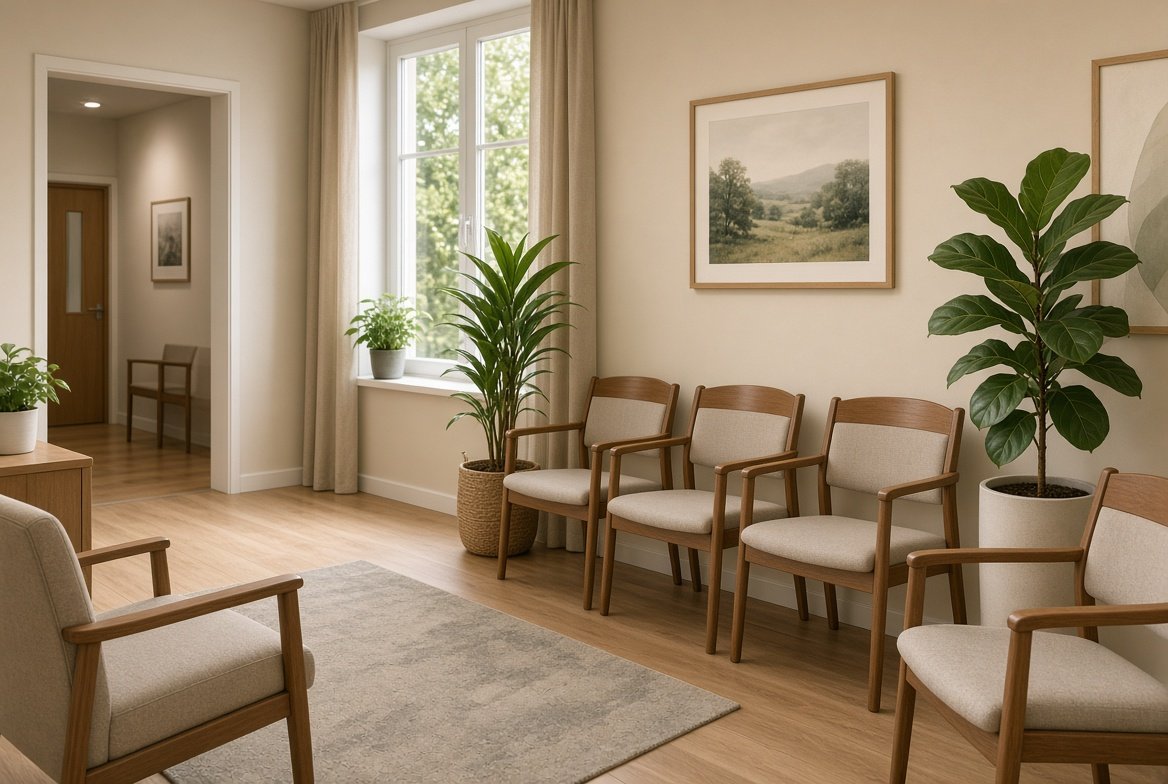
Um zehn sitzen sie im Wartezimmer🇬🇧 waiting roomdas zwischen Bauklötzen und einem Plakat zur Impfung🇬🇧 vaccinationdie🇬🇧 vaccinationdie.
Der Kinderarzt🇬🇧 paediatriciander🇬🇧 paediatriciander fragt nach Impfungen und nach dem Essen, nicht nach der Schuld. Schuld ist hier kein medizinisches Wort.
Er schaut Ohren, Hals, Lunge🇬🇧 lungdie. Das Kind weint einmal und hört auf, als die Untersuchung endet.
Viral, sagt er. Kein Antibiotikum🇬🇧 antibioticdas ohne Grund. Mara nickt, weil sie den Grund versteht.
Ein Attest🇬🇧 medical certificatedas🇬🇧 sick note / certificatedas für die Kita🇬🇧 daycaredie liegt nach zehn Minuten auf dem Tisch. Ohne Attest bleibt das Kind unsichtbar für die Einrichtung.
Dosierung🇬🇧 dosagedie🇬🇧 dosagedie des Safts: nach Gewicht🇬🇧 weightdas🇬🇧 weightdas, nicht nach Mut. Mara wiederholt das Gewicht und die Milliliter.
In der Apotheke nennt sie das Alter, bevor die Frau den Saft🇬🇧 syrupder nimmt. Alter ist hier eine Dosis.
Zu Hause stellt sie den Wecker zur nächsten Messung🇬🇧 measurementdie. Fieberkurve klingt nach Krankenhaus und ist nur ein Heft.
Abends ist die Zahl kleiner. Sie streicht nichts. Sie schreibt dazu: trinkt, spielt kurz, schläft.
Am nächsten Tag bringt sie das Attest🇬🇧 medical certificatedas🇬🇧 sick note / certificatedas in die Kita🇬🇧 daycaredie und fotografiert den Eingangstempel. Stempel🇬🇧 stampder sind in Deutschland ein Satz.
Das Kind malt im Heft einen Arzt mit großen Ohren. Mara schreibt darunter: Fieber🇬🇧 feverdas🇬🇧 feverdas, Attest🇬🇧 medical certificatedas🇬🇧 sick note / certificatedas, Impfung🇬🇧 vaccinationdie🇬🇧 vaccinationdie.
Sie merkt: Wer misst und aufschreibt, hat weniger Raum für Panik. Papier nimmt der Angst die Hälfte.
Das Fieber🇬🇧 feverdas🇬🇧 feverdas ist seit zwei Tagen weg, und trotzdem ruft die Kita🇬🇧 daycaredie am Morgen an, weil das Kind erst mit einem klaren Satz zurückkommen soll. Diese Lektion übt Sprache und ersetzt keinen Arzt und keine Behandlung. Mara hat das erste Attest🇬🇧 medical certificatedas🇬🇧 sick note / certificatedas schon abgegeben, aber die Leitung wünscht ein Wort zur Rückkehr, nicht eine neue Geschichte aus dem Flur. Sie ruft in der Praxis🇬🇧 medical practicedie🇬🇧 practicedie an und sagt: Das Fieber ist unten, das Kind trinkt, wir brauchen einen Termin🇬🇧 appointmentder zur Rückmeldung, kein Notfall. Die Ansage lässt sie ausreden. Danach bekommt sie eine Stunde am frühen Nachmittag. Mara schreibt die Stunde groß an den Kühlschrank, packt das Heft, die alte Dosierung🇬🇧 dosagedie🇬🇧 dosagedie und das Gewicht🇬🇧 weightdas🇬🇧 weightdas aus dem letzten Zettel ein. Das Kind sucht derweil die kleinen Schuhe.
Im Wartezimmer🇬🇧 waiting roomdas baut das Kind einen Turm und wirft ihn ohne Trauer um. Mara lässt den Turm Turm sein und liest das Plakat zur Impfung🇬🇧 vaccinationdie🇬🇧 vaccinationdie noch einmal, diesmal die Daten am Rand und nicht nur das bunte Bild. Eine Zeile sagt, welche Impfung im nächsten Monat für das Alter ansteht. Mara schreibt die Zeile ab und setzt ein Fragezeichen, weil sie den Satz vom Kinderarzt🇬🇧 paediatriciander🇬🇧 paediatriciander hören will, nicht nur vom Plakat. Sie hat die Chipkarte schon an der Anmeldung gezeigt. Die Wartenummer ist niedrig. Das Kind zählt die Zahl laut und falsch und lacht. Mara korrigiert die Zahl einmal freundlich und schreibt sie danach richtig ins Heft. Richtig und freundlich dürfen im selben Satz stehen. Das merkt sie sich auch für die Theke.
Der Kinderarzt🇬🇧 paediatriciander🇬🇧 paediatriciander kennt den Namen vom letzten Besuch und fragt zuerst nach Trinken, Schlaf und Spiel, nicht nach Schuld. Mara antwortet in kurzen Sätzen: trinkt gut, schläft länger, spielt mit dem Turm, Fieber🇬🇧 feverdas🇬🇧 feverdas seit zwei Tagen keines. Sie zeigt die Liste der Messungen, die sie nicht mehr jede Stunde führt, sondern nur noch morgens. Er liest die Zahlen und sagt, für die Rückkehr in die Kita🇬🇧 daycaredie sehe er nach dieser kurzen Untersuchung keinen Hinderungsgrund auf dem Papier. Mara bittet ihn, diesen Satz langsam zu wiederholen, und schreibt ihn auf. Sie fragt, welches Wort sie an der Tür der Kita benutzen soll. Er sagt: wieder zugelassen nach Attest🇬🇧 medical certificatedas🇬🇧 sick note / certificatedas, Fieber frei seit zwei Tagen. Mara wiederholt frei und zugelassen, weil beide Wörter im Formular der Kita vorkommen.
Dann kommt das Gewicht🇬🇧 weightdas🇬🇧 weightdas. Das Kind stellt sich barfuß auf die Waage und hält sich nicht am Regal fest, nachdem Mara es einmal bittet. Die Zahl ist fast dieselbe wie beim letzten Mal. Der Kinderarzt🇬🇧 paediatriciander🇬🇧 paediatriciander sagt, die Dosierung🇬🇧 dosagedie🇬🇧 dosagedie von damals habe sich auf dieses Gewicht bezogen, und für den Rest des Saftes bleibe der Zettel gültig, solange Mara ihn nicht eigenmächtig verlängert. Mara fragt nur nach dem Wort bei Bedarf, das auf dem Zettel steht. Er erklärt: bei Bedarf heißt nicht bei Angst, sondern nur nach dem Satz, der daneben steht, und wenn der Satz nicht mehr zutrifft, braucht es keinen Saft🇬🇧 syrupder mehr. Mara schreibt diese Erklärung unter die Dosierung. Sie streicht nicht die alte Zeile. Sie ergänzt sie. Ergänzen ist höflicher als Vernichten.
Mara zeigt auf das Plakat und fragt nach der Impfung🇬🇧 vaccinationdie🇬🇧 vaccinationdie im nächsten Monat. Der Kinderarzt🇬🇧 paediatriciander🇬🇧 paediatriciander öffnet die Liste und sagt, die Impfung sei fällig, aber nicht heute, weil der Termin🇬🇧 appointmentder heute nur die Rückkehr betrifft. Er schreibt das voraussichtliche Datum auf eine Karte und sagt, die Praxis🇬🇧 medical practicedie🇬🇧 practicedie erinnere auch per Nachricht. Mara schreibt das Datum zusätzlich ins Heft und ins Handy. Sie fragt, was sie mitbringen soll. Den Impfpass, die Chipkarte und etwas Zeit fürs Wartezimmer🇬🇧 waiting roomdas. Sie fragt, ob das Kind nüchtern sein muss. Für diese Impfung nein, sagt er, ein normales Frühstück sei in Ordnung. Mara notiert Frühstück erlaubt und setzt keinen Ausrufezeichensturm daneben. Ein ruhiges Wort bleibt besser im Kopf als drei Ausrufezeichen, die nur laut tun.
Das neue Attest🇬🇧 medical certificatedas🇬🇧 sick note / certificatedas ist kurz. Oben der Name des Kindes, dann der Satz zur Rückkehr, dann Stempel🇬🇧 stampder und Datum. Mara liest ihn laut und fragt, ob die Kita🇬🇧 daycaredie eine Kopie behalten darf. Ja, sagt die Mitarbeiterin an der Anmeldung, das Original könne Mara danach zurückverlangen oder selbst kopieren und das Original behalten. Mara entscheidet sich, das Original zu behalten und der Kita eine Kopie zu geben. Sie kennt dieses Muster von anderen Ämtern. Originale sind die Eltern der Kopien. Sie fragt nach einem zweiten Stempel auf der Kopie. Die Frau stempelt beide. Mara bedankt sich und lässt das Kind den Stempel sehen, ohne ihn anfassen zu lassen. Stempel sind trocken und trotzdem keine Sticker. Das sagt sie freundlich, und das Kind akzeptiert die Regel.
Im Flur hängt ein Schild mit dem Wort Kinderkrankenhaus🇬🇧 children's hospitaldas und einem Pfeil zu einem anderen Gelände. Mara bleibt stehen und fragt die Pflegefachfrau, wann man dieses Wort benutzt. Die Frau sagt, das Kinderkrankenhaus sei für Aufenthalte und für Fälle, die eine Station brauchen, und der heutige Termin🇬🇧 appointmentder sei eine Sache der Praxis🇬🇧 medical practicedie🇬🇧 practicedie, kein Pfeil. Mara schreibt den Unterschied auf: Praxis für den Termin heute, Kinderkrankenhaus nur wenn die Praxis es sagt. Das Kind fragt, ob der Pfeil zu einem Spielplatz führt. Mara sagt nein und zeigt auf die echte Tür nach draußen. Sie ist froh über die Frage, weil sie selbst fast denselben Impuls hatte, aus einem Schild eine Reise zu machen. Schilder sind Einladungen zum Lesen, nicht immer zum Gehen.
Bevor sie gehen, fragt Mara nach den Kosten. Die Mitarbeiterin sagt, die Kontrolle und das Attest🇬🇧 medical certificatedas🇬🇧 sick note / certificatedas liefen über die Chipkarte, ein Eigenanteil stehe heute nicht auf dem Bildschirm. Mara bittet um den Satz auf einem Zettel, falls die Kita🇬🇧 daycaredie oder später jemand nach Geld fragt. Die Frau schreibt: Termin🇬🇧 appointmentder zur Rückmeldung, Abrechnung über die Karte. Mara heftet den Zettel an das Attest. Das Kind will den Turm noch einmal bauen, und Mara erlaubt einen kleinen Turm, dann die Schuhe. Im Heft stehen inzwischen Kinderarzt🇬🇧 paediatriciander🇬🇧 paediatriciander, Fieber🇬🇧 feverdas🇬🇧 feverdas, Impfung🇬🇧 vaccinationdie🇬🇧 vaccinationdie, Attest, Kinderkrankenhaus🇬🇧 children's hospitaldas, Gewicht🇬🇧 weightdas🇬🇧 weightdas, Dosierung🇬🇧 dosagedie🇬🇧 dosagedie, Wartezimmer🇬🇧 waiting roomdas, Termin und Praxis🇬🇧 medical practicedie🇬🇧 practicedie. Sie liest die Liste nicht laut im Flur. Sie liest sie später. Im Flur reicht der Satz auf dem Attest, und der Satz ist schon gestempelt.
Auf dem Weg zur Kita🇬🇧 daycaredie übt Mara den Satz für die Leitung, und das Kind singt etwas anderes daneben. Beides darf parallel laufen. An der Tür gibt sie die Kopie, zeigt den Stempel🇬🇧 stampder und sagt: wieder zugelassen nach Attest🇬🇧 medical certificatedas🇬🇧 sick note / certificatedas, Fieber🇬🇧 feverdas🇬🇧 feverdas frei seit zwei Tagen. Die Leitung liest, nickt und holt einen Eingangstempel. Mara fotografiert den Stempel erst, nachdem sie gefragt hat, ob das erlaubt ist. Die Leitung sagt ja, ohne andere Kinder auf dem Bild. Mara macht das Foto eng. Das Kind umarmt eine Erzieherin und verschwindet zum Turm, der hier größer ist. Mara bleibt nicht stehen, um zu beobachten. Der Satz ist abgegeben. Beobachtung ohne Auftrag wäre nur Anhaften. Sie geht zum Bäcker und kauft Brot für den Abend.
Zu Hause schreibt sie die zehn Wörter sauber auf eine neue Seite und setzt die Artikel davor. Das Fieber🇬🇧 feverdas🇬🇧 feverdas bekommt den Vermerk: seit zwei Tagen keines, Liste bleibt als Nachweis der Tage davor. Die Dosierung🇬🇧 dosagedie🇬🇧 dosagedie bekommt die Erklärung von bei Bedarf. Die Impfung🇬🇧 vaccinationdie🇬🇧 vaccinationdie bekommt das Datum im nächsten Monat. Das Kinderkrankenhaus🇬🇧 children's hospitaldas bekommt den Satz mit dem Pfeil und dem Nein für heute. Mara kocht danach eine einfache Suppe und stellt die restliche Saftflasche nicht auf den Tisch als Mittelpunkt. Sie bleibt im Schrank, mit dem Zettel nach vorn. Beim Essen erzählt sie ihrer Schwester am Telefon nur, dass das Kind wieder in der Kita🇬🇧 daycaredie ist und der Stempel🇬🇧 stampder sitzt. Ihre Schwester sagt, Stempel seien ihre Lieblingssprache geworden. Mara widerspricht nicht.
Am nächsten Morgen misst sie nicht aus Angst, sondern weil der Kühlschrankzettel noch eine letzte morgendliche Zeile verlangt, die sie selbst dort angebracht hat. Die Zahl ist ruhig und alltäglich. Mara schreibt sie auf und setzt dann einen Strich unter die Liste. Ein Strich bedeutet: die enge Phase ist zu Ende, nicht die Aufmerksamkeit für den Kalender. Sie bringt das Kind zur Kita🇬🇧 daycaredie und benutzt keinen medizinischen Satz an der Tür. Sie sagt nur bis später. Die Erzieherin sagt bis später zurück. Diese normalen Wörter fühlen sich nach dem Attest🇬🇧 medical certificatedas🇬🇧 sick note / certificatedas fast festlich an, und Mara erlaubt sich das Gefühl, ohne es im Heft zu vergrößern. Nicht jedes Gefühl braucht eine Vokabelkarte. Manche dürfen im Mantel bleiben.
In der Mittagspause kopiert sie das Attest🇬🇧 medical certificatedas🇬🇧 sick note / certificatedas noch einmal für die Mappe und legt die Impfkarte daneben, obwohl der Termin🇬🇧 appointmentder erst im nächsten Monat ist. Frühes Ablegen verhindert das Suchen am Vorabend. Sie schreibt eine Erinnerung: Impfpass, Chipkarte, Frühstück erlaubt, Zeit fürs Wartezimmer🇬🇧 waiting roomdas. Vier Punkte, keine Rede. Danach arbeitet sie eine Stunde an einer ganz anderen Liste, einer für die Arbeit, und sie vermischt die Listen nicht. Vermischen wäre ein Fehler, den man später teuer liest. Am Nachmittag holt sie das Kind ab. Es zeigt einen gemalten Kreis und nennt ihn Sonne. Mara schreibt zu Hause unter die Zeichnung nicht das Wort Fieber🇬🇧 feverdas🇬🇧 feverdas. Sie schreibt den Namen des Kindes und das Datum. Bilder dürfen Bilder bleiben.
Am Abend prüft sie den Saft🇬🇧 syrupder im Schrank und die Erklärung zu bei Bedarf noch einmal, ohne eine neue Dosis zu erfinden. Der Zettel des Kinderarztes bleibt die einzige Anweisung, und das Heft erklärt nur das Wort. Diese Trennung schreibt sie extra auf: Heft erklärt Sprache, Zettel der Praxis🇬🇧 medical practicedie🇬🇧 practicedie sagt, was gilt. Sie ist zufrieden mit der Trennung, weil sie den Tag über genau dafür geöffnet hat. Das Kind schläft früher als in der Nacht mit dem Fieber🇬🇧 feverdas🇬🇧 feverdas. Mara stellt kein Thermometer auf den Nachttisch. Sie stellt ein Glas Wasser in die Küche für sich selbst und liest eine Seite im Roman. Auf der Seite kommt kein Krankenhaus vor. Das ist Zufall und trotzdem angenehm. Sie faltet die Ecke nicht um. Sie merkt sich die Seitenzahl.
Am nächsten Tag ist der Kühlschrank fast frei von medizinischen Zetteln. Nur die Impfung🇬🇧 vaccinationdie🇬🇧 vaccinationdie bleibt als Datum stehen, klein, unten, nicht in roter Schrift. Mara wischt einen Tropfen Saft🇬🇧 syrupder vom Regal und wirft den Lappen in die Wäsche, nicht in eine Geschichte. Das Heft kommt ins Regal neben die Mappe der Kita🇬🇧 daycaredie. Auf dem Rücken steht der Monat. Ihre Schwester schickt ein kurzes Herz, und Mara antwortet mit dem Wort danke und einem Foto vom gemalten Kreis, nicht vom Attest🇬🇧 medical certificatedas🇬🇧 sick note / certificatedas. Papiere sind keine Grüße. Gegen Abend liest sie die zehn Wörter einmal und klappt das Heft zu, bevor sie sie ein elftes Mal verbessert. Genug ist eine Entscheidung. Die Kita hat den Satz. Der Kalender hat das nächste Datum.