Germaniva Smart German Learning · Stories & Tests
← B1 · Krankenhaus Stories
B1 · Krankenhaus

Beim Zahnarzt

Betäubung · Füllung · Eigenanteil

Audio-Geschichte: deutsche Stimme, englische Übersetzung, Maus über jedem Wort für eine Echtzeit-Übersetzung, danach ein Test.

Beim Zahnarzt – Deutsch lernen mit Geschichte, German story B1 · Krankenhaus
Hover-Übersetzung ?Maus auf ein Wort → eine englische Übersetzung und der Artikel.
0 / 0
Teile
Beim Zahnarzt

Der Zahn🇬🇧 toothder pocht seit gestern. Mara sagt das so, ohne Drama. Pochen braucht keine Ausschmückung.

Um acht ruft sie in der Praxis🇬🇧 practicedie an. Die Ansage nennt zwei Nummern: Termine und Notfälle.

Sie sagt: Seit gestern Nacht, links unten, pocht, kein Fieber🇬🇧 feverdas, aber Schlaf war unmöglich.

Die Mitarbeiterin fragt nach der Chipkarte🇬🇧 health carddie und nach einer Überweisung🇬🇧 referraldie. Mara hat keine Überweisung, nur Schmerz.

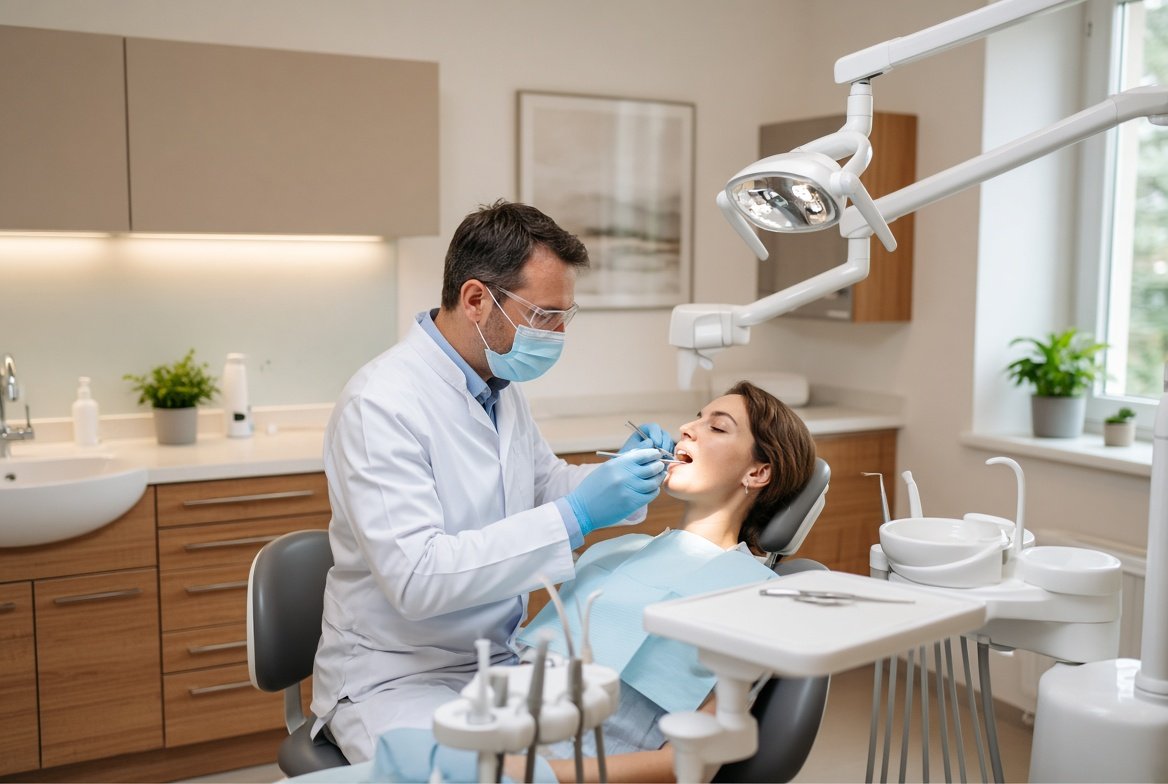
Um zehn sitzt sie im Stuhl. Der Zahnarzt🇬🇧 dentistder🇬🇧 dentistder erklärt Betäubung🇬🇧 anestheticdie🇬🇧 anaestheticdie und Füllung🇬🇧 fillingdie🇬🇧 fillingdie, bevor er anfängt.

Sie darf fragen, was die Kasse🇬🇧 statutory insurerdie🇬🇧 health insurerdie zahlt und was als Eigenanteil🇬🇧 own shareder🇬🇧 copayder auf die Rechnung🇬🇧 billdie kommt.

Die Betäubung🇬🇧 anestheticdie🇬🇧 anaestheticdie kommt zuerst als Druck, dann als Stille in der Wange. Stille ist hier Medizin.

Während der Betäubung🇬🇧 anestheticdie🇬🇧 anaestheticdie zählt sie die Löcher in der Decke. Zählen ist eine Beschäftigung ohne Mund.

Nach der Füllung🇬🇧 fillingdie🇬🇧 fillingdie sagt er: Weiches Essen, heute kein Sport, bei Fieber🇬🇧 feverdas anrufen.

An der Anmeldung zahlt sie den Eigenanteil🇬🇧 own shareder🇬🇧 copayder und fotografiert die Quittung🇬🇧 receiptdie🇬🇧 receiptdie neben das Rezept🇬🇧 prescriptiondas.

Draußen ist die Straße zu laut. Die Wange fühlt sich an wie ein fremdes Zimmer.

In der Apotheke wiederholt sie die Dosierung🇬🇧 dosagedie zweimal. Allergie: keine. Wechselwirkung: keine bekannt.

Zu Hause schreibt sie die neuen Wörter ins Heft: die Betäubung🇬🇧 anestheticdie🇬🇧 anaestheticdie, die Füllung🇬🇧 fillingdie🇬🇧 fillingdie, der Eigenanteil🇬🇧 own shareder🇬🇧 copayder.

Abends ruft die Schwester an. War es schlimm. Es war genau. Genau ist anstrengend, aber heilbar.

Am nächsten Morgen isst sie Brot ohne Rinde. Der Zahn🇬🇧 toothder bleibt still. Still ist ein Erfolg.

Sie legt Quittung🇬🇧 receiptdie🇬🇧 receiptdie und Rezept🇬🇧 prescriptiondas in dieselbe Mappe wie den Brief vom Amt. Papiere sind eine Sprache, auch wenn der Mund ruht.

Mara hat einen Termin🇬🇧 appointmentder beim Zahnarzt🇬🇧 dentistder🇬🇧 dentistder und sitzt vorher mit dem Kalender am Tisch. Diese Lektion übt Sprache und ersetzt keine Beratung. Sie ersetzt keinen Arzt und keine Beratung. Mara übt nur die Wörter für Anmeldung, Behandlung und Rechnung🇬🇧 billdie. Sie legt die Karte der Versicherung🇬🇧 insurancedie bereit und schreibt auf, welche Stelle seit einigen Tagen beim Kauen stört, ohne die Stelle auszumalen. Am Telefon hat sie den Termin bestätigt und nach dem Namen der Praxis🇬🇧 practicedie gefragt. Sie will wissen, was die Kasse🇬🇧 statutory insurerdie🇬🇧 health insurerdie übernimmt und was als Eigenanteil🇬🇧 own shareder🇬🇧 copayder bleiben kann. Diese Fragen stellt sie vor der Behandlung und nicht erst im Stuhl, wenn die Zeit knapp ist. Die Fragen stehen schon auf einem Zettel in ihrer Tasche.

In der Praxis🇬🇧 practicedie nennt Mara ihren Namen und gibt die Karte der Versicherung🇬🇧 insurancedie an der Anmeldung ab. Sie sagt, dass sie einen Termin🇬🇧 appointmentder hat und dass sie vorab verstehen möchte, was die Kasse🇬🇧 statutory insurerdie🇬🇧 health insurerdie zahlt. Die Anmeldung erklärt, welche Unterlagen heute nötig sind. Mara fragt, ob ein Kostenplan🇬🇧 cost plander vorgesehen ist, bevor etwas begonnen wird, das über eine einfache Kontrolle hinausgeht. Sie setzt sich ins Wartezimmer und lässt das Telefon leise. Wenn sie aufgerufen wird, begrüßt sie den Zahnarzt🇬🇧 dentistder🇬🇧 dentistder und beschreibt die Stelle in einem kurzen Satz. Sie bittet um einfache Wörter. Eine lange Vorgeschichte erzählt sie nur, wenn danach gefragt wird. Den Zettel mit den Fragen behält sie in der Hand.

Der Zahnarzt🇬🇧 dentistder🇬🇧 dentistder schaut nach und erklärt einen möglichen nächsten Schritt. Mara wiederholt, was sie verstanden hat: Es geht um eine Füllung🇬🇧 fillingdie🇬🇧 fillingdie, und vorher kann eine Betäubung🇬🇧 anestheticdie🇬🇧 anaestheticdie nötig sein. Sie fragt, ob die Betäubung in ihrem Fall üblich ist und wie lange das taube Gefühl danach anhalten kann. Sie verlangt keine Einzelheit, die sie nicht braucht. Dann kommt die Frage nach dem Geld. Mara sagt: Was übernimmt die Kasse🇬🇧 statutory insurerdie🇬🇧 health insurerdie, und was ist der Eigenanteil🇬🇧 own shareder🇬🇧 copayder? Sie bittet um den Betrag auf einem Zettel oder im Kostenplan🇬🇧 cost plander, bevor sie zustimmt. Eine Zahl, die nur im Vorbeigehen fällt, schreibt sie nicht als feste Zusage auf. Sie wartet, bis die Zahl lesbar vor ihr liegt.

Der Kostenplan🇬🇧 cost plander liegt auf dem Tisch, und Mara liest ihn Zeile für Zeile. Sie sucht die Füllung🇬🇧 fillingdie🇬🇧 fillingdie, die Betäubung🇬🇧 anestheticdie🇬🇧 anaestheticdie und den Eigenanteil🇬🇧 own shareder🇬🇧 copayder als getrennte Punkte, falls sie so aufgeführt sind. Nicht jede Praxis🇬🇧 practicedie gliedert gleich, deshalb fragt sie nach, statt zu raten. Die Versicherung🇬🇧 insurancedie oder die Kasse🇬🇧 statutory insurerdie🇬🇧 health insurerdie steht vielleicht als Zahlender in einer Spalte. Mara fragt, welcher Teil sicher von der Kasse kommt und welcher Teil von ihrer Entscheidung abhängt. Sie unterschreibt den Kostenplan nicht, solange der Eigenanteil unklar ist. Ein höflicher Satz hilft: Ich möchte das zu Hause mit der Unterlage vergleichen. Der Zahnarzt🇬🇧 dentistder🇬🇧 dentistder kann sagen, ob das zeitlich möglich ist. Mara notiert diese Auskunft mit der Uhrzeit.

Mara unterscheidet die Kasse🇬🇧 statutory insurerdie🇬🇧 health insurerdie von einer zusätzlichen Versicherung🇬🇧 insurancedie. Die Karte der gesetzlichen Kasse liegt in ihrer Mappe, und eine extra Police würde sie nur erwähnen, wenn sie eine hat. In dieser Übung tut sie so, als würde sie nach beiden Wegen fragen, ohne eine Police zu bewerten. Sie sagt: Bitte zeigen Sie mir, was die Kasse für diese Füllung🇬🇧 fillingdie🇬🇧 fillingdie zahlt. Wenn ein Anteil bleibt, heißt er für sie Eigenanteil🇬🇧 own shareder🇬🇧 copayder, und sie will ihn vor der Behandlung sehen. Die Betäubung🇬🇧 anestheticdie🇬🇧 anaestheticdie fragt sie getrennt, damit sie nicht in einer Sammelzeile verschwindet. Der Termin🇬🇧 appointmentder bleibt der heutige Besuch und nicht automatisch der nächste Schritt. Beide Wege schreibt sie als zwei kurze Spalten nebeneinander.

Bevor eine Füllung🇬🇧 fillingdie🇬🇧 fillingdie beginnt, fragt Mara, ob sie heute noch etwas essen oder trinken soll und ob sie danach arbeiten kann. Sie erwartet keine allgemeine Regel aus dieser Lektion, sondern die Auskunft dieser Praxis🇬🇧 practicedie. Die Betäubung🇬🇧 anestheticdie🇬🇧 anaestheticdie erwähnt sie noch einmal, falls sie unsicher ist, und sie sagt deutlich, wenn sie ein Medikament nennt, das der Zahnarzt🇬🇧 dentistder🇬🇧 dentistder kennen sollte. Sie erfindet hier keine Namen von Mitteln. Sie übt nur den Satz: Ich nehme dieses Mittel, bitte notieren Sie es. Dann hört sie zu. Wenn sie abbrechen möchte, sagt sie das, bevor der nächste Schritt startet. Zustimmung soll klar sein und nicht nur aus Schweigen bestehen. Ein Nicken allein gilt für sie nicht als Antwort.

Nach der Behandlung bleibt Mara noch einen Moment sitzen und hört die Nachsorge🇬🇧 aftercaredie. Sie bittet den Zahnarzt🇬🇧 dentistder🇬🇧 dentistder, die Nachsorge in drei kurzen Sätzen zu sagen: was sie heute lassen soll, wann das taube Gefühl nachlassen kann und wann sie wieder anrufen soll. Sie schreibt diese Sätze auf oder bittet um einen Zettel. Die Nachsorge ist kein Forum und kein Tipp von nebenan. Mara fragt, ob eine weitere Kontrolle als neuer Termin🇬🇧 appointmentder nötig ist. Den Termin trägt sie ein, bevor sie das Haus verlässt. Wenn etwas auf der Quittung🇬🇧 receiptdie🇬🇧 receiptdie unklar ist, bleibt sie an der Anmeldung und lässt es erklären, statt draußen zu raten. Den Zettel zur Nachsorge steckt sie vor die Quittung.

An der Anmeldung bekommt Mara eine Quittung🇬🇧 receiptdie🇬🇧 receiptdie oder einen Hinweis, dass die Abrechnung direkt mit der Kasse🇬🇧 statutory insurerdie🇬🇧 health insurerdie läuft. Sie fragt, welcher Fall heute gilt. Wenn sie selbst einen Eigenanteil🇬🇧 own shareder🇬🇧 copayder zahlt, prüft sie den Betrag auf der Quittung gegen den Kostenplan🇬🇧 cost plander. Name, Datum und die Art der Leistung sollen lesbar sein. Mara steckt die Quittung in die Mappe zur Versicherung🇬🇧 insurancedie und nicht in eine lose Jackentasche. Sie fotografiert das Blatt nur für sich. Eine Quittung ist der Beleg für das, was heute bezahlt oder dokumentiert wurde. Ohne sie wäre der Eigenanteil später nur eine Erinnerung und keine Unterlage. Das Foto prüft sie noch im Hausflur auf Lesbarkeit.

Zu Hause legt Mara Kostenplan🇬🇧 cost plander, Quittung🇬🇧 receiptdie🇬🇧 receiptdie und den Zettel zur Nachsorge🇬🇧 aftercaredie nebeneinander. Sie erzählt niemandem eine dramatische Geschichte. Sie übt einen sachlichen Satz: Ich war beim Zahnarzt🇬🇧 dentistder🇬🇧 dentistder, es gab eine Füllung🇬🇧 fillingdie🇬🇧 fillingdie, die Betäubung🇬🇧 anestheticdie🇬🇧 anaestheticdie war Teil der Behandlung, und der Eigenanteil🇬🇧 own shareder🇬🇧 copayder steht auf der Quittung. Wenn die Kasse🇬🇧 statutory insurerdie🇬🇧 health insurerdie einen Teil übernimmt, sagt sie das nur so, wie es auf dem Papier steht. Sie vergleicht die Zahlen einmal und legt die Blätter dann ab. Den nächsten Termin🇬🇧 appointmentder markiert sie im Kalender. Die Nachsorge liest sie am Abend noch einmal, damit sie keinen Satz aus dem Wartezimmer vergisst. Die drei Blätter bleiben in dieser Reihenfolge in der Mappe.

Am nächsten Tag prüft Mara, ob sie der Versicherung🇬🇧 insurancedie etwas schicken muss oder ob die Praxis🇬🇧 practicedie das mit der Kasse🇬🇧 statutory insurerdie🇬🇧 health insurerdie klärt. Sie ruft nicht mehrere Stellen gleichzeitig an. Zuerst liest sie die Quittung🇬🇧 receiptdie🇬🇧 receiptdie. Steht dort ein Hinweis, folgt sie diesem Hinweis. Fehlt ein Hinweis, fragt sie die Anmeldung mit einem kurzen Satz und notiert die Antwort. Den Eigenanteil🇬🇧 own shareder🇬🇧 copayder zahlt sie nur in der Höhe, die sie verstanden und gesehen hat. Eine neue Zahl am Telefon lässt sie sich wiederholen und möglichst schriftlich geben. Der Zahnarzt🇬🇧 dentistder🇬🇧 dentistder bleibt der Ort der Behandlung. Die Kasse und die Versicherung sind Orte der Unterlagen. Mara vermischt die drei nicht. Jede Antwort bekommt das Datum des Anrufs.

Mara übt Fragen, die höflich und konkret sind. Welche Füllung🇬🇧 fillingdie🇬🇧 fillingdie ist das, in einfachen Worten? Ist eine Betäubung🇬🇧 anestheticdie🇬🇧 anaestheticdie vorgesehen? Was zahlt die Kasse🇬🇧 statutory insurerdie🇬🇧 health insurerdie? Wie hoch ist der Eigenanteil🇬🇧 own shareder🇬🇧 copayder? Brauche ich einen Kostenplan🇬🇧 cost plander vor dem Beginn? Was gehört zur Nachsorge🇬🇧 aftercaredie? Wann ist der nächste Termin🇬🇧 appointmentder? Bekomme ich eine Quittung🇬🇧 receiptdie🇬🇧 receiptdie? Sie stellt nicht alle Fragen in einem Atemzug. Sie wählt die Frage, die zum Moment passt. Der Zahnarzt🇬🇧 dentistder🇬🇧 dentistder und die Anmeldung können dann genauer antworten. Mara wiederholt die Antwort in ihren eigenen Wörtern. Wenn die Wiederholung falsch ist, kann man sie sofort verbessern. Dieses Verfahren ersetzt keine Entscheidung über die Gesundheit. Es macht nur die nächste Frage klarer.

Eine Freundin fragt Mara, ob die Füllung🇬🇧 fillingdie🇬🇧 fillingdie teuer wird. Mara sagt, dass sie das nicht für einen anderen Mund beantworten kann. Sie zeigt nur, welche Wörter sie benutzt hat: Zahnarzt🇬🇧 dentistder🇬🇧 dentistder, Betäubung🇬🇧 anestheticdie🇬🇧 anaestheticdie, Füllung, Eigenanteil🇬🇧 own shareder🇬🇧 copayder, Kasse🇬🇧 statutory insurerdie🇬🇧 health insurerdie, Nachsorge🇬🇧 aftercaredie, Quittung🇬🇧 receiptdie🇬🇧 receiptdie, Termin🇬🇧 appointmentder, Versicherung🇬🇧 insurancedie und Kostenplan🇬🇧 cost plander. Die Freundin soll in der eigenen Praxis🇬🇧 practicedie fragen, was die Kasse zahlt, und den Eigenanteil vor einer Zustimmung lesen. Diese Lektion ersetzt keinen Arzt und keine Beratung. Sie macht die Rechnung🇬🇧 billdie und die Nachsorge sprachlich greifbar. Wer unsicher ist, nimmt eine Person mit, die zuhören darf, und lässt sich den Kostenplan in Ruhe erklären, bevor etwas beginnt. Die Freundin schreibt ihre eigenen Zahlen und nicht die von Mara.

Mara bewahrt die Quittung🇬🇧 receiptdie🇬🇧 receiptdie so lange auf, wie sie Rückfragen für möglich hält. Sie heftet sie hinter den Kostenplan🇬🇧 cost plander und schreibt das Datum des Termins auf den Rand. Die Nachsorge🇬🇧 aftercaredie hat sie abgehakt, soweit die Sätze für die ersten Stunden gemeint waren. Einen neuen Termin🇬🇧 appointmentder sagt sie nicht ab, ohne die Praxis🇬🇧 practicedie anzurufen. Wenn die Stelle sich anders anfühlt als besprochen, schildert sie das in einem Satz und bittet um einen Rat der Praxis, nicht um einen Rat aus dem Chat. Die Versicherung🇬🇧 insurancedie informiert sie nur, wenn die Quittung das verlangt. So bleiben Behandlung und Papier getrennt und trotzdem auffindbar. Den Ordner stellt sie neben die anderen Unterlagen von Mara.

Am Ende der Woche kann Mara den Besuch nacherzählen, ohne Einzelheiten auszumalen. Sie hatte einen Termin🇬🇧 appointmentder, sie hat nach Betäubung🇬🇧 anestheticdie🇬🇧 anaestheticdie und Füllung🇬🇧 fillingdie🇬🇧 fillingdie gefragt, sie hat den Eigenanteil🇬🇧 own shareder🇬🇧 copayder und die Kasse🇬🇧 statutory insurerdie🇬🇧 health insurerdie auf dem Kostenplan🇬🇧 cost plander gesucht, und sie hat die Quittung🇬🇧 receiptdie🇬🇧 receiptdie mit der Nachsorge🇬🇧 aftercaredie abgelegt. Die Versicherung🇬🇧 insurancedie bleibt die Stelle für die Karte und für eventuelle Unterlagen. Der Zahnarzt🇬🇧 dentistder🇬🇧 dentistder bleibt die Person für die Behandlung. Diese Lektion übt Sprache und ersetzt keinen Arzt und keine Beratung. Mara benutzt die Sätze beim nächsten Termin wieder, aber sie kopiert keine alte Zahl. Jede Quittung muss für sich lesbar sein, sonst fängt sie die Frage von vorn an. Das Datum auf dem Rand hilft ihr dabei sofort.

Vollständige englische Übersetzung

English audio
0 / 0
parts

The tooth has throbbed since yesterday. Mara says so without drama. Throbbing needs no decoration.

At eight she calls the practice. The message names two numbers: appointments and emergencies.

She says: since last night, lower left, throbbing, no fever, but sleep was impossible.

The clerk asks for the health card and a referral. Mara has no referral, only pain.

At ten she sits in the chair. The dentist explains anaesthetic and filling before he starts.

She may ask what the insurer pays and what the copay on the bill will be.

The anaesthetic comes first as pressure, then as silence in the cheek. Silence is medicine here.

During the anaesthetic she counts the holes in the ceiling. Counting is an occupation without a mouth.

After the filling he says: soft food, no sport today, call if there is fever.

At reception she pays the copay and photographs the receipt next to the prescription.

Outside the street is too loud. The cheek feels like a foreign room.

At the pharmacy she repeats the dose twice. Allergy: none. Interaction: none known.

At home she writes the new words in the notebook: anaesthetic, filling, copay.

In the evening her sister calls. Was it bad. It was exact. Exact is tiring but curable.

The next morning she eats bread without crust. The tooth stays quiet. Quiet is a success.

She puts receipt and prescription in the same folder as the letter from the office. Papers are a language even when the mouth rests.

Mara has an appointment at the dentist and sits beforehand at the table with the calendar. This lesson practices language and does not replace advice. It does not replace a doctor and does not replace advice. Mara only practices the words for reception, treatment and invoice. She gets the insurance card ready and writes down which spot has bothered her when chewing for a few days, without describing the spot in detail. On the phone she confirmed the appointment and asked for the name of the practice. She wants to know what the statutory insurer covers and what can remain as her own share. She asks these questions before the treatment and not only in the chair, when time is short. The questions are already on a note in her bag.

At the practice Mara says her name and hands in the insurance card at reception. She says that she has an appointment and that she would like to understand beforehand what the statutory insurer pays. Reception explains which papers are needed today. Mara asks whether a cost plan is planned before anything begins that goes beyond a simple check. She sits in the waiting room and keeps the phone quiet. When she is called, she greets the dentist and describes the spot in a short sentence. She asks for simple words. She tells a long history only if someone asks for it. She keeps the note with the questions in her hand.

The dentist looks and explains a possible next step. Mara repeats what she has understood: it is about a filling, and an anesthetic may be needed beforehand. She asks whether the anesthetic is usual in her case and how long the numb feeling can last afterwards. She does not demand a detail she does not need. Then comes the question of money. Mara says: what does the statutory insurer cover, and what is my own share? She asks for the amount on a note or in the cost plan before she agrees. She does not write down a figure that is only mentioned in passing as a firm promise. She waits until the figure lies readable in front of her.

The cost plan lies on the table, and Mara reads it line by line. She looks for the filling, the anesthetic and her own share as separate points, if they are listed that way. Not every practice divides the page the same way, so she asks instead of guessing. The insurance or the statutory insurer may stand as the payer in a column. Mara asks which part certainly comes from the statutory insurer and which part depends on her decision. She does not sign the cost plan as long as her own share is unclear. A polite sentence helps: I would like to compare this at home with the paper. The dentist can say whether that is possible in time. Mara notes this information with the time.

Mara distinguishes the statutory insurer from an additional insurance. The card of the statutory insurer lies in her folder, and she would mention an extra policy only if she has one. In this exercise she acts as if she asks about both routes, without rating a policy. She says: please show me what the statutory insurer pays for this filling. If a share remains, she calls it her own share, and she wants to see it before the treatment. She asks about the anesthetic separately so that it does not disappear in a combined line. The appointment remains today's visit and not automatically the next step. She writes both routes as two short columns side by side.

Before a filling begins, Mara asks whether she should still eat or drink today and whether she can work afterwards. She expects no general rule from this lesson, but the information of this practice. She mentions the anesthetic once more if she is unsure, and she says clearly if she names a medicine the dentist should know about. She invents no names of medicines here. She only practices the sentence: I take this medicine, please note it. Then she listens. If she wants to stop, she says so before the next step starts. Consent should be clear and not consist only of silence. A nod alone does not count as an answer for her.

After the treatment Mara stays seated for a moment and listens to the aftercare. She asks the dentist to say the aftercare in three short sentences: what she should avoid today, when the numb feeling may ease and when she should call again. She writes these sentences down or asks for a note. Aftercare is not a forum and not a tip from next door. Mara asks whether a further check is needed as a new appointment. She enters the appointment before she leaves the building. If something on the receipt is unclear, she stays at reception and has it explained instead of guessing outside. She puts the aftercare note in front of the receipt.

At reception Mara receives a receipt or a note that billing runs directly with the statutory insurer. She asks which case applies today. If she herself pays her own share, she checks the amount on the receipt against the cost plan. Name, date and the kind of service should be readable. Mara puts the receipt in the folder with the insurance and not in a loose jacket pocket. She photographs the sheet only for herself. A receipt is the proof of what was paid or documented today. Without it her own share would later be only a memory and not a document. She checks the photo for readability while she is still in the hallway.

At home Mara lays the cost plan, the receipt and the aftercare note side by side. She tells nobody a dramatic story. She practices a factual sentence: I was at the dentist, there was a filling, the anesthetic was part of the treatment, and my own share is on the receipt. If the statutory insurer covers a part, she says that only as it stands on the paper. She compares the figures once and then files the sheets. She marks the next appointment in the calendar. In the evening she reads the aftercare once more so that she does not forget a sentence from the waiting room. The three sheets stay in that order in the folder.

The next day Mara checks whether she must send something to the insurance or whether the practice settles it with the statutory insurer. She does not call several places at the same time. First she reads the receipt. If a note stands there, she follows that note. If a note is missing, she asks reception with a short sentence and writes down the answer. She pays her own share only in the amount she has understood and seen. She has a new figure on the phone repeated and, if possible, given in writing. The dentist remains the place of treatment. The statutory insurer and the insurance are places of documents. Mara does not mix the three. Every answer gets the date of the call.

Mara practices questions that are polite and concrete. What kind of filling is that, in simple words? Is an anesthetic planned? What does the statutory insurer pay? How high is my own share? Do I need a cost plan before it begins? What belongs to the aftercare? When is the next appointment? Do I get a receipt? She does not ask all the questions in one breath. She chooses the question that fits the moment. The dentist and reception can then answer more precisely. Mara repeats the answer in her own words. If the repetition is wrong, it can be corrected at once. This procedure does not replace a decision about health. It only makes the next question clearer.

A friend asks Mara whether the filling will be expensive. Mara says that she cannot answer that for another mouth. She only shows which words she used: dentist, anesthetic, filling, own share, statutory insurer, aftercare, receipt, appointment, insurance and cost plan. The friend should ask in her own practice what the statutory insurer pays and read her own share before agreeing. This lesson does not replace a doctor and does not replace advice. It makes the bill and the aftercare tangible in language. Anyone who is unsure takes a person along who is allowed to listen and has the cost plan explained in peace before anything begins. The friend writes her own figures and not Mara's.

Mara keeps the receipt as long as she thinks later questions are possible. She staples it behind the cost plan and writes the date of the appointment in the margin. She has ticked off the aftercare as far as the sentences were meant for the first hours. She does not cancel a new appointment without calling the practice. If the spot feels different from what was discussed, she describes that in one sentence and asks for advice from the practice, not for advice from a chat. She informs the insurance only if the receipt requires it. In that way treatment and paper stay separate and still easy to find. She puts the folder beside Mara's other documents.

At the end of the week Mara can retell the visit without painting details. She had an appointment, she asked about the anesthetic and the filling, she looked for her own share and the statutory insurer on the cost plan, and she filed the receipt with the aftercare. The insurance remains the place for the card and for any papers. The dentist remains the person for the treatment. This lesson practices language and does not replace a doctor and does not replace advice. Mara uses the sentences again at the next appointment, but she copies no old figure. Every receipt must be readable on its own, otherwise she starts the question from the beginning. The date in the margin helps her with that at once.

🌱
Lebenslektion

Fragen nach Geld ist keine Unhöflichkeit, wenn der Mund nicht sprechen kann.

Asking about money is not rudeness when the mouth cannot speak.

📝 Tests / Übungen

Beantworte die Fragen. Bei 100 % gibt es eine Überraschung.

1. Was erklärt der Zahnarzt vor dem Anfang?

2. Was darf Mara fragen?

3. Was zahlt sie an der Anmeldung?

4. Was isst sie am nächsten Morgen?

5. Wohin legt sie Quittung und Rezept?

6. Welchen Artikel hat „die Betäubung“?

📚 Wichtige Wörter · Important Words

der = blau die = rot das = grün

der Zahnarzt
[ˈtsaːnʔaːɐ̯tst]
dentist
DEErklärung

dentist

der Zahn
[tsaːn]
tooth
DEErklärung

tooth

die Betäubung
[bəˈtɔybʊŋ]
anaesthetic
DEErklärung

anaesthetic

die Füllung
[ˈfʏlʊŋ]
filling
DEErklärung

filling

der Eigenanteil
[ˈaɪɡn̩ʔantaɪl]
copay
DEErklärung

Selbst zu tragender Anteil; absoluter oder prozentualer Anteil an den Gesamtkosten, den der Versicherungsnehmer im Versicherungsfall selbst tragen muss

die Rechnung
[ˈʁɛçnʊŋ]
bill
DEErklärung

Formular, Papier mit der schriftlichen Aufstellung der gekauften Ware oder verrichteten Dienstleistung und der Angabe des Preises, der dafür bezahlt werden muss; Summe, die für eine Ware oder Dienstleistung bezahlt werden muss

die Quittung
[ˈkvɪtʊŋ]
receipt
DEErklärung

Bescheinigung über den Empfang einer Ware, Geldsumme, Postsendung, Empfangsbestätigung; Antwort, Vergeltung

die Kasse
[ˈkasə]
health insurer
DEErklärung

Verschließbarer kastenförmiger Behälter, in dem Geldscheine und Münzen aufbewahrt werden; das zur Verfügung stehende Geld, die Geldmittel

das Rezept
[ʁeˈtsɛpt]
prescription
DEErklärung

Schriftliche Anweisung des Arztes zur (Anfertigung und) Abgabe eines Arzneimittels durch den Apotheker; Anleitung zur Zubereitung eines Nahrungsmittels, Genussmittels, Kochrezept, Backrezept

die Chipkarte
[ˈtʃɪpkaʁtə]
health card
DEErklärung

Plastikkarte mit einem ¹Chip

die Überweisung
[ˈyːbɐvaɪzʊŋ]
referral
DEErklärung

Das Überweisen; überwiesene Summe

die Praxis
[ˈpʁaxɪs]
practice
DEErklärung

practice

das Fieber
[ˈfiːbɐ]
fever
DEErklärung

Erhöhte Körpertemperatur bei krankhaft verändertem Allgemeinzustand als Abwehrreaktion des Organismus; leidenschaftliche (seelische, geistige) Erregung, Besessenheit

die Dosierung
[doˈziːʁʊŋ]
dosage
DEErklärung

Das Dosieren; abgemessene, dosierte Menge von etw

der Zahnarzt
[tsaːnaʁtst]
dentist
DEErklärung

dentist

die Betäubung
[bətɔɪbʊŋ]
anesthetic
DEErklärung

anesthetic

die Füllung
[fʏlʊŋ]
filling
DEErklärung

filling

der Eigenanteil
[aɪɡn̩antaɪl]
own share
DEErklärung

Selbst zu tragender Anteil; absoluter oder prozentualer Anteil an den Gesamtkosten, den der Versicherungsnehmer im Versicherungsfall selbst tragen muss

die Kasse
[kasə]
statutory insurer
DEErklärung

Verschließbarer kastenförmiger Behälter, in dem Geldscheine und Münzen aufbewahrt werden; das zur Verfügung stehende Geld, die Geldmittel

die Nachsorge
[naːxzɔʁɡə]
aftercare
DEErklärung

Medizinische und psychische Betreuung eines Patienten über einen längeren Zeitraum nach einer Krankheit, Operation

die Quittung
[kvɪtʊŋ]
receipt
DEErklärung

Bescheinigung über den Empfang einer Ware, Geldsumme, Postsendung, Empfangsbestätigung; Antwort, Vergeltung

der Termin
[tɛʁmiːn]
appointment
DEErklärung

Festgelegter Zeitpunkt, Tag; für die Fertigstellung, Abgabe von etw., besonders einer Arbeit, festgelegter Zeitpunkt

die Versicherung
[fɛɐzɪçəʁʊŋ]
insurance
DEErklärung

Das Versichern; Beteuerung, Zusicherung, Erklärung, dass etw. gewiss und sicher sei

der Kostenplan
[kɔstn̩plaːn]
cost plan
DEErklärung

cost plan

Dein Lernbericht

Derselbe Anschluss wird wiedererkannt, ohne dass die IP-Adresse gespeichert wird. Nur eine Prüfsumme liegt auf dem Server. Daneben zählt dieses Gerät die Seiten, die du schon geöffnet hast.

0Bereiche
0Geschichten
0Tests geschafft
0Seitenaufrufe

Noch kein Weg gespeichert. Öffne eine Geschichte oder einen Test.